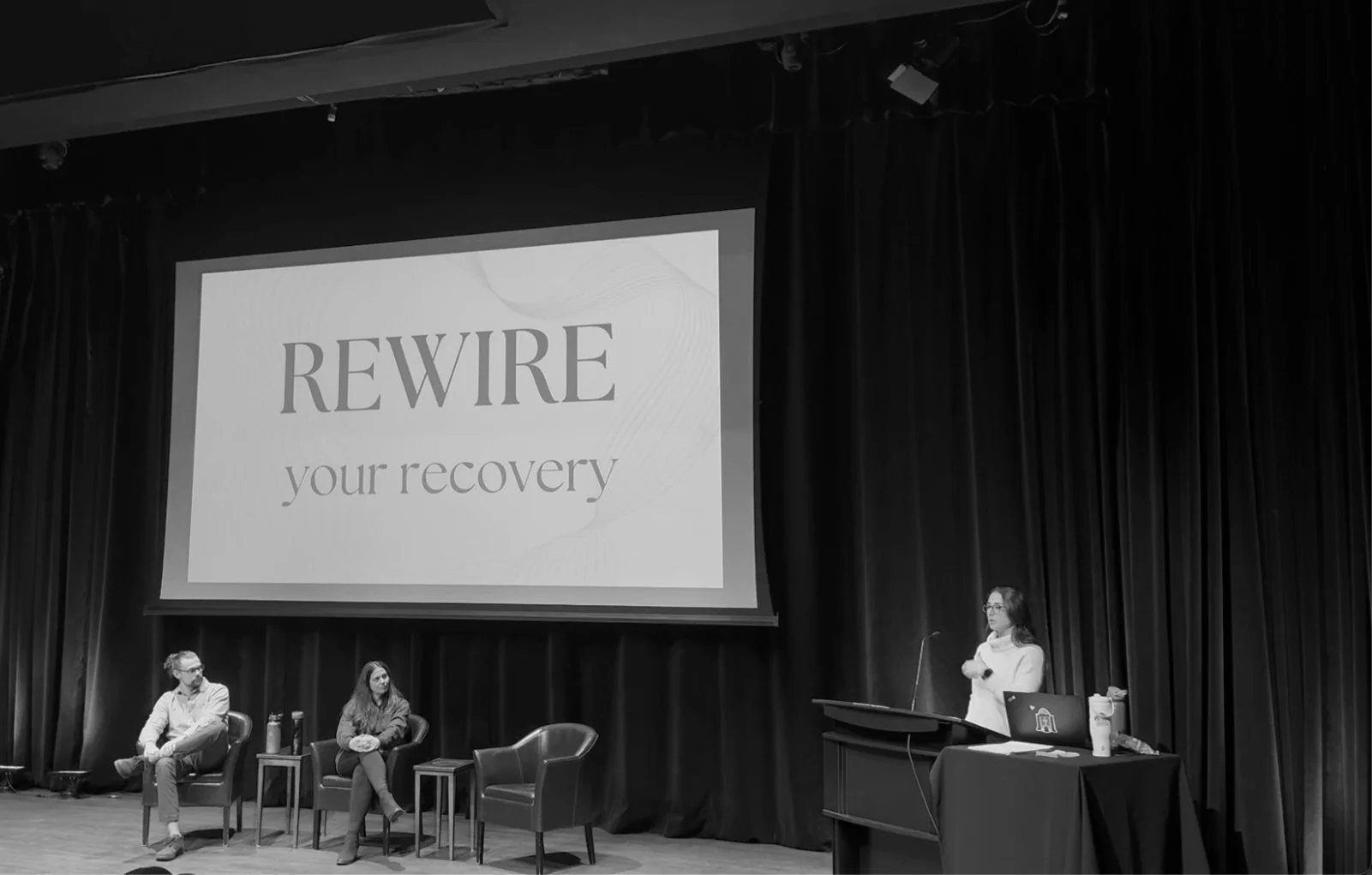
Concussion Education & Workshops
Evidence-informed keynotes and workshops for healthcare practitioners, sport teams and organizations impacted by concussions. Designed to build understanding and improve recovery.
Managing concussion recovery is challenging for everyone;
Patients- You're following every protocol. But no one seems to have a treatment plan for the the fear, exhaustion, and quiet grief of losing yourself.
Athletes - Physical clearance doesn't mean feeling ready. The identity loss and anxiety are holding you back in your sport.
Parents - You can see your child struggling and don't know how to help. The uncertainty is its own kind of hard
Healthcare Providers - You see the full picture. Your appointments don't give you room to address it.
Coaches and Sport Organizations - The pressure to return to performance is real. The tools to support the mental side of that return largely aren't.
Clinics and Healthcare Organizations - The physical side of concussion recovery has protocols. The psychological side largely does not.
Speaking & Educational Workshops
Concussions & Mental Health:
Psychological Impact of Concussions
-
For anyone and everyone, because concussions are common.
More specifically this supports sports teams and organizations, schools and multidisciplinary clinics -
Despite the growing awareness around concussions, few understand the psychological impact: what it feels like to be inside prolonged recovery, why mental health symptoms develop, and what to do about them.
-
A clearer picture of the full concussion experience, more attuned communication with patients and athletes, and a practical framework for integrating psychological awareness into their work.
Psychologically Informed Concussion Care:
Support for Health Care Providers
-
Healthcare Providers: Doctors, physiotherapists, athletic therapists, chiropractors, sport psychologists, occupational therapists, concussion clinic teams & multidisciplinary health teams.
-
Practitioners are increasingly aware that psychological factors matter in concussion recovery. What is less clear is how to address them practically, within existing sessions, within scope, and without adding to an already full workload.
-
Your team will leave with practical tools to embed psychological considerations into concussion care, improving patient outcomes without expanding the caseload or stepping outside scope of practice.

About Cait Leavitt
Registered Clinical Counsellor, Certified Mental Performance Consultant &
Concussion Advocate
Cait’s work sits at intersection of concussion recovery, mental health & performance psychology.
Her perspective blends clinical depth, current research, and a lived experience into every room.
Cait’s presentations are designed to shift understanding and not just deliver information. Practitioners and sport professionals leave with tools they can use immediately, without needing a degree in psychology to apply them.
What The Research Tells Us
Untreated psychological factors can prolong concussion recovery
Pre-existing mental health challenges are a strongest predictors of delayed recovery
Signifiant population of those with persistent symptoms develop mental health challenges that can last anywhere from months to years after the concussion
Patients consistently report leaving health care appointments feeling feeling confused, worried and hesitant to continue care
Practitioners mental health support and concussion education as critical unmet needs
This isn't a failure of care. It's a gap in how concussion recovery has been framed and it's one that can be addressed.
trusted in providing Concussion Informed Care with: